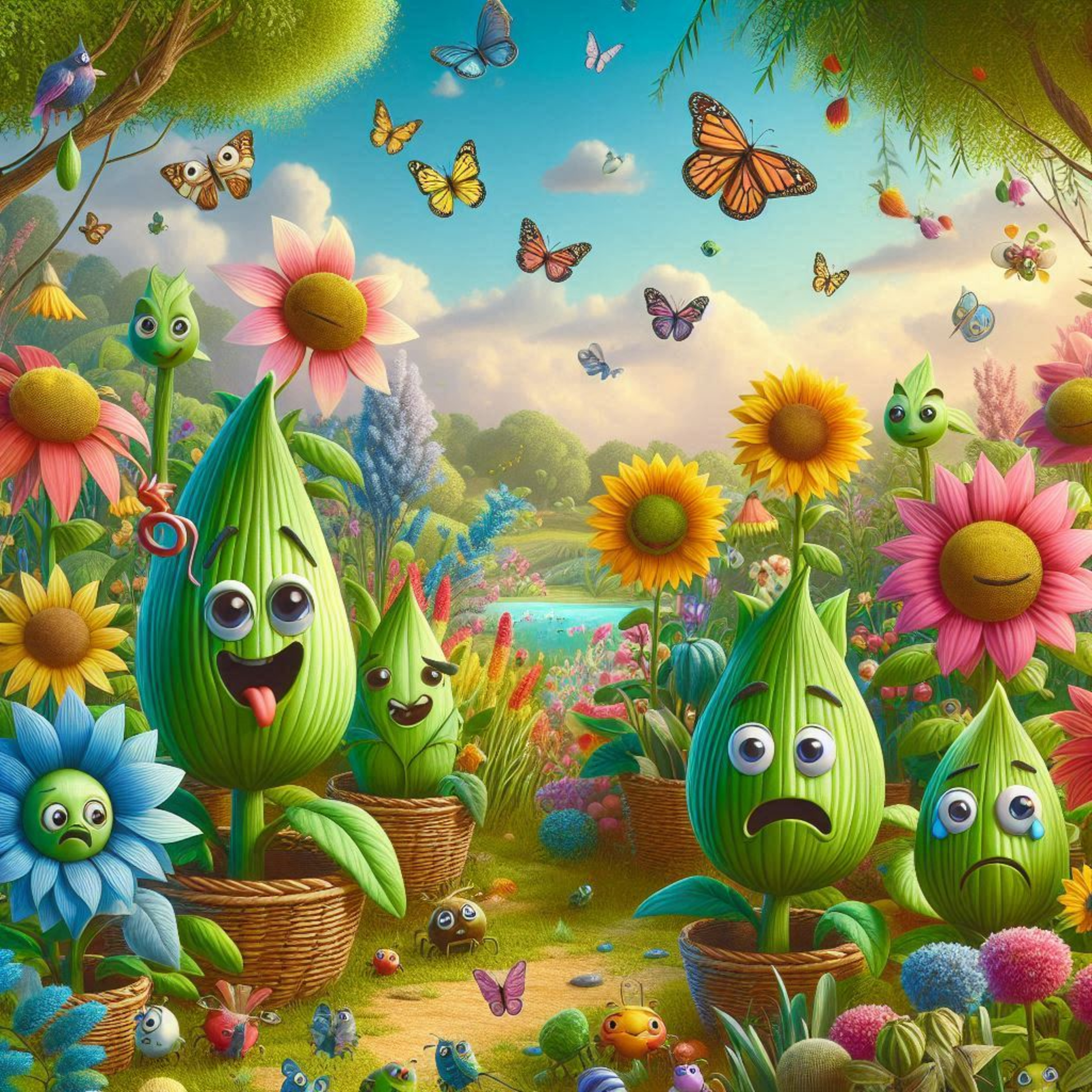
Do plants have feelings?
Listen to this episode
What You'll Learn
- How plants can "feel" and grow toward light (phototropism)
- The amazing way vines sense and respond to touch (thigmotropism)
- How Venus flytraps detect and catch insects
- Plants' secret communication system through chemical signals
- The "Wood Wide Web" - how plants share resources underground
- How plants can recognize their siblings
- Plants' ability to "hear" and respond to sounds and vibrations
- When caterpillars munch on leaves, plants release warning chemicals to alert their neighbors
- Plants can make themselves taste bad when they detect predators
- Some flowers produce more nectar when they "hear" bees buzzing nearby
- Plants share resources more generously with family members than with strangers
- If plants can do all this without brains, what other amazing abilities might they have?
Show Notes
Join Andy on The Curiious Kidcast as he explores the fascinating world of plant sentience! Do plants have feelings? While they don't have brains like us, discover how plants can sense and respond to their environment in amazing ways. Learn about phototropism (how plants feel and grow toward light), thigmotropism (how vines sense touch), and how Venus flytraps detect prey. Explore plant communication through chemical signals, the underground "Wood Wide Web" network, and how plants recognize family members. Did you know some plants can even hear caterpillars munching on leaves or detect bee buzzing? Perfect for curious kids ages 7-11 interested in botany, plant science, biology, and nature's hidden wonders. This engaging, fact-filled episode transforms how young listeners view the green world around them, proving plants are far more aware than we thought! Great for classroom discussions, family science time, and inspiring young naturalists.
Show Notes
In this episode of The Curiious Kidcast, Andy takes us on a fascinating journey into the world of plant senses. Did you know plants can do much more than just sit there and look pretty? They're actually sensing and responding to their environment in incredible ways!
What You'll Learn:
- How plants can "feel" and grow toward light (phototropism)
- The amazing way vines sense and respond to touch (thigmotropism)
- How Venus flytraps detect and catch insects
- Plants' secret communication system through chemical signals
- The "Wood Wide Web" - how plants share resources underground
- How plants can recognize their siblings
- Plants' ability to "hear" and respond to sounds and vibrations
Cool Facts:
- When caterpillars munch on leaves, plants release warning chemicals to alert their neighbors
- Plants can make themselves taste bad when they detect predators
- Some flowers produce more nectar when they "hear" bees buzzing nearby
- Plants share resources more generously with family members than with strangers
Questions to Ponder:
- If plants can do all this without brains, what other amazing abilities might they have?
- How should we think about plant intelligence?
- What might plants be sensing that we don't even know about yet?
Join us next time for another mind-expanding adventure on The Curiious Kidcast, where curiosity leads to discovery!
Don't forget to review, share, and subscribe. Have questions about plants or other topics? Drop them in the comments!
Resources for Curious Kids:
- Try growing your own plants and observe how they respond to light
- Visit a botanical garden to see different plant adaptations
- Look for videos of Venus flytraps in action
The Curiious Kidcast makes science fun and accessible for children ages 7-11, encouraging them to observe the world around them with wonder and curiosity.
#NatureForKids #SciencePodcast #CuriousKids #KidScience #STEM #EnvironmentalEducation