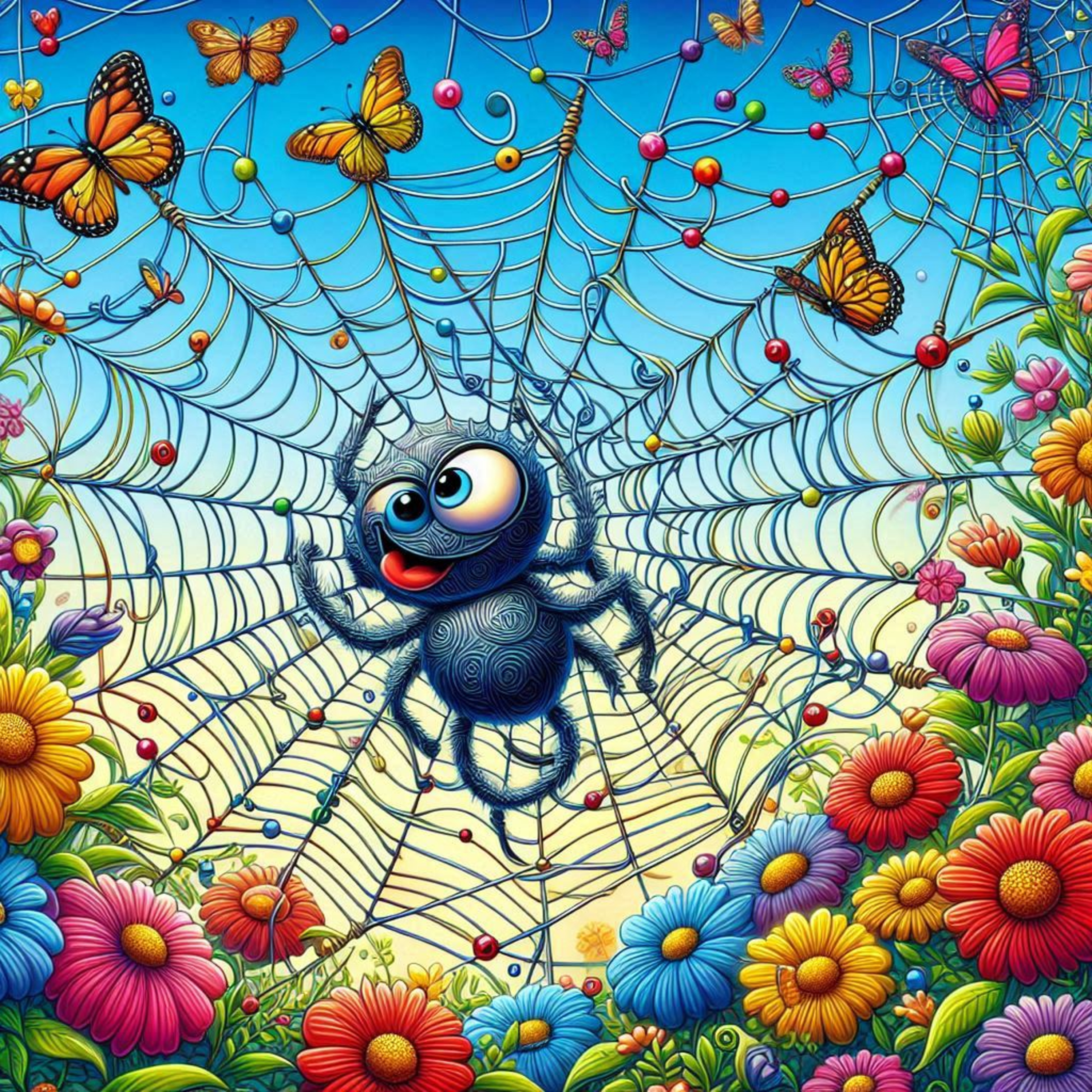
Can spiders get stuck in their own webs?
Listen to this episode
Fun Facts
Try This at Home
Show Notes
Discover the mind-blowing secrets of how spiders navigate their sticky traps without becoming dinner themselves! In this episode of The Curious Kidcast, Andy reveals the incredible adaptations—from non-stick leg coatings to special superhero hairs—that help these eight-legged architects move freely on their webs. Perfect for curious kids who love creepy crawlies, amazing animal facts, and the coolest science mysteries hiding in your backyard. Learn why some spiders become spider pirates and what happens in the ultimate spider showdown!
Episode Overview
In this fascinating episode, host Andy unravels the mystery of how spiders navigate their sticky webs without becoming trapped themselves. Perfect for curious young minds ages 7-11!
Key Topics Covered
- The two types of spider silk: sticky spiral threads vs. non-sticky radial threads
- Spider's built-in "non-stick spray" coating on their legs
- The microscopic special hairs (setae) that minimize web contact
- How spiders remember their web's safe pathways
- Spider grooming habits that keep them web-free
Did You Know?
- Kleptoparasitic spiders are like "spider pirates" who steal food from other spiders' webs
- The bolas spider uses a lasso-like hunting technique instead of a traditional web
- Some spiders release scents to attract other spiders as prey
Vocabulary Words
- Orb weavers - Spiders that build classic round webs
- Hydrophobic - A property that repels water
- Setae - Tiny specialized hairs on spider legs
Activity Ideas
- Observe spiders in your backyard (safely from a distance)
- Draw a diagram of a spider web showing the radial and spiral threads
- Create your own spider web using string or yarn
Questions to Discuss
- What other animals have special adaptations that help them survive?
- Why do you think different spiders evolved different kinds of webs?
- What might happen if a spider didn't have its special non-stick coating?