Are there other earths out there? | Amazing Space trivia for kids
Listen to this episode
Show Notes
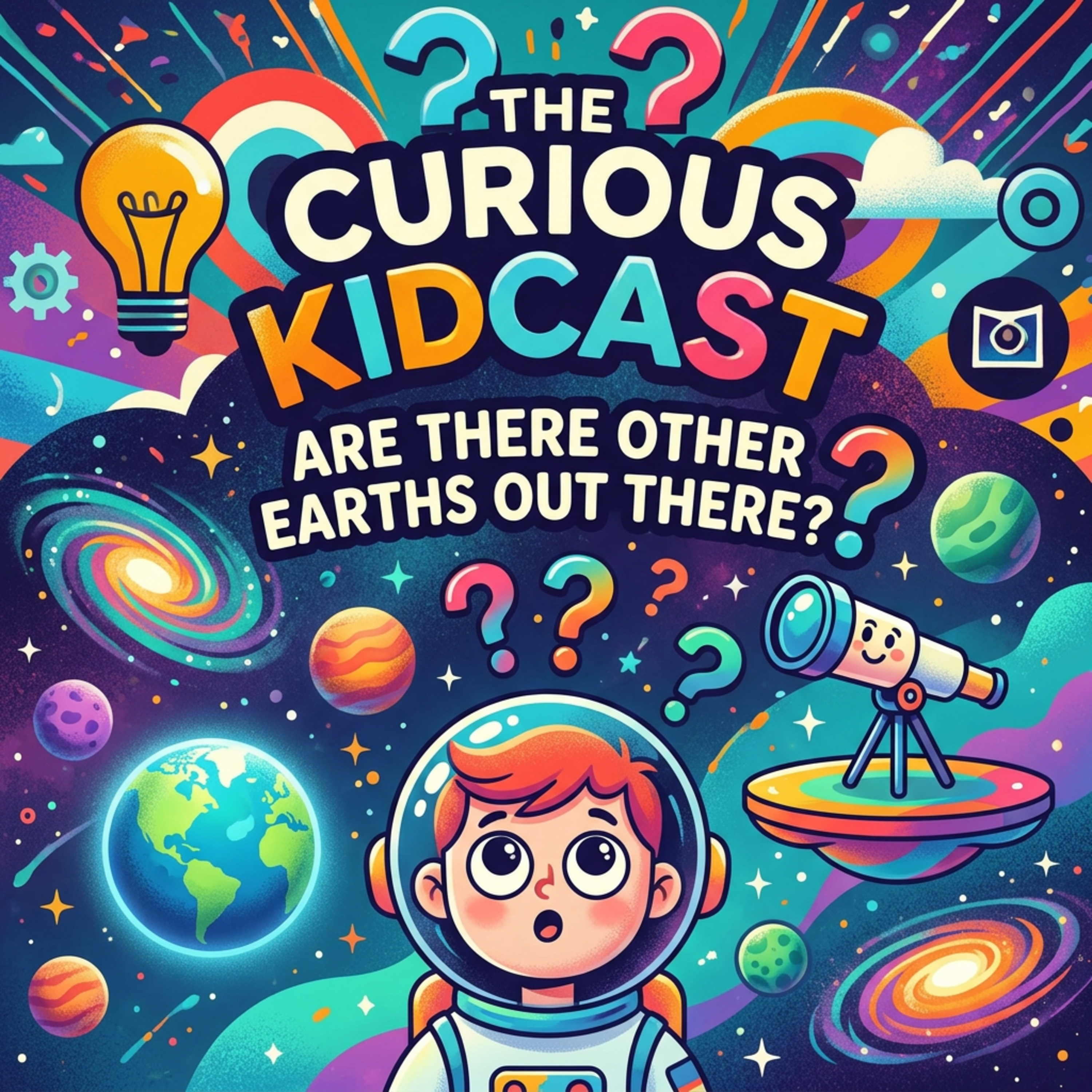
What if there was another planet, somewhere far out in space, that looked just like Earth? What if it had oceans, mountains, clouds, and maybe even its own version of pizza? In this episode of The Curious Kidcast, your host Charlie tackles one of the biggest questions curious kids ask: are there other Earths out there?
What Your Child Will Learn
- What scientists mean when they talk about "another Earth"
- What an exoplanet is and why they are so exciting
- Why liquid water is one of the most important ingredients for life
- What the Goldilocks Zone is and why it matters
- Real exoplanets scientists have discovered, including Kepler-452b and TRAPPIST-1
- How scientists find planets using the transit method and the wobble method
- What biosignatures are and how future telescopes might detect life
- Why the universe is probably too big for Earth to be completely unique
Episode Highlights
- Why a year on Kepler-452b is slightly longer than on Earth, which means waiting even longer for Christmas
- A star system called TRAPPIST-1 that has seven Earth-sized planets orbiting the same star
- Why "Earth-like planet" headlines can be a little sneaky, and what scientists actually know
- The wobble method, possibly the greatest name in all of science
- A three-question fun quiz to test what your kids have learned
Perfect For
- Curious kids aged 7 to 11
- Families who love learning together on car journeys, walks, or at home
- Homeschool science lessons on space, astronomy, and the solar system
- Parents looking for safe, funny, and genuinely educational content
- Teachers looking for a fun supplement to KS2 science topics
- Anyone who has ever looked at the night sky and wondered "is anyone else out there?"
Episode Quiz Questions
At the end of every episode, Charlie runs a fun multiple choice quiz. This episode's questions cover:
- What do scientists call planets outside our solar system?
- What is the nickname for the "just right" distance from a star?
- How does the transit method work?
Can your child get all three right? Listen and find out.
Fun Facts From This Episode
- Scientists have discovered more than 6,000 exoplanets outside our solar system
- On some planets, it rains molten iron
- The Goldilocks Zone is the region around a star that is not too hot and not too cold for liquid water
- Kepler-452b is often called Earth's cousin and takes 385 days to orbit its star
- TRAPPIST-1 has seven planets orbiting the same star, some in the habitable zone
- The Milky Way contains hundreds of billions of stars, many of which have their own planets
Keywords and Topics Covered
kids science
exoplanets
space for kids
homeschool science
family podcast
are there other earths
Goldilocks Zone
Kepler-452b
TRAPPIST-1
alien life for kids
fun science facts
nature and science
educational podcast
learning for kids
curious kids
parenting
KS2 science
biosignatures
transit method
wobble method
Got a question you'd like Charlie to answer?
Head to curiouskidcast.com and send it in. It could be about space, animals, the human body, food, weather, or why adults always say "we'll see" when they clearly mean no. We want to hear from you.
About The Curious Kidcast
The Curious Kidcast is a fun, funny, and properly researched science and nature podcast for kids aged 7 to 11. Each episode takes a real question asked by a real child and turns it into an audio adventure packed with facts, comedy, and a short quiz. It is completely safe for kids, loved by parents, and the perfect companion for families who love learning together.
New episodes are released weekly. Subscribe so you never miss one, and if your child has a burning question about the world, the universe, or anything in between, visit curiouskidcast.com to send it in.